
Your asphalt pavement will typically last 15-20 years in New Jersey, though the state’s harsh climate—featuring 80-100 freeze-thaw cycles annually and 140°F temperature swings—can reduce that lifespan by 30-40% without proper installation and maintenance. Water infiltration from 47 inches of annual precipitation accelerates deterioration, while coastal salt and northern thermal stress create region-specific challenges. Understanding these factors and implementing strategic maintenance protocols will help you maximize your pavement’s service life and avoid premature replacement costs.
Key Takeaways
- Asphalt pavement typically lasts 15-20 years in New Jersey, depending on installation quality and maintenance practices.
- New Jersey’s 80-100 annual freeze-thaw cycles reduce asphalt lifespan by 30-40% compared to stable climates.
- Water infiltration from 47 inches of annual precipitation is the primary cause of asphalt deterioration.
- Dense-graded mixes with proper aggregate ratios outperform substandard formulations by 30-40% in longevity.
- Regular maintenance including sealcoating every 2-3 years and timely crack sealing significantly extends pavement lifespan.
Understanding Asphalt Lifespan Expectations in the Garden State
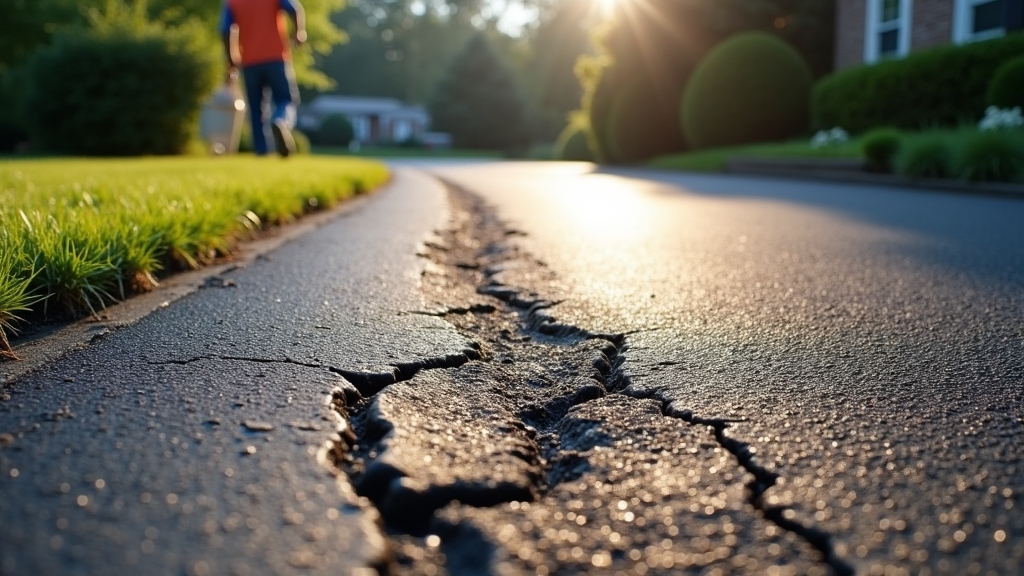
In New Jersey’s challenging climate, asphalt pavement typically lasts 15-20 years under ideal conditions, though this timeline varies considerably based on installation quality and maintenance practices.
You’ll find that asphalt composition directly impacts durability—dense-graded mixes with proper aggregate ratios outperform substandard formulations by 30-40%.
The state’s freeze-thaw cycles, averaging 40-50 annually, accelerate deterioration through moisture infiltration and thermal stress.
Environmental factors including UV radiation, salt exposure from winter de-icing, and temperature fluctuations between -10°F and 100°F create prime conditions for oxidation and cracking.
You can’t ignore New Jersey’s heavy traffic loads and water table variations, which compound these stressors.
Understanding these region-specific variables enables you to establish realistic longevity expectations and develop proactive maintenance strategies.
How New Jersey’s Freeze-Thaw Cycles Impact Pavement Durability
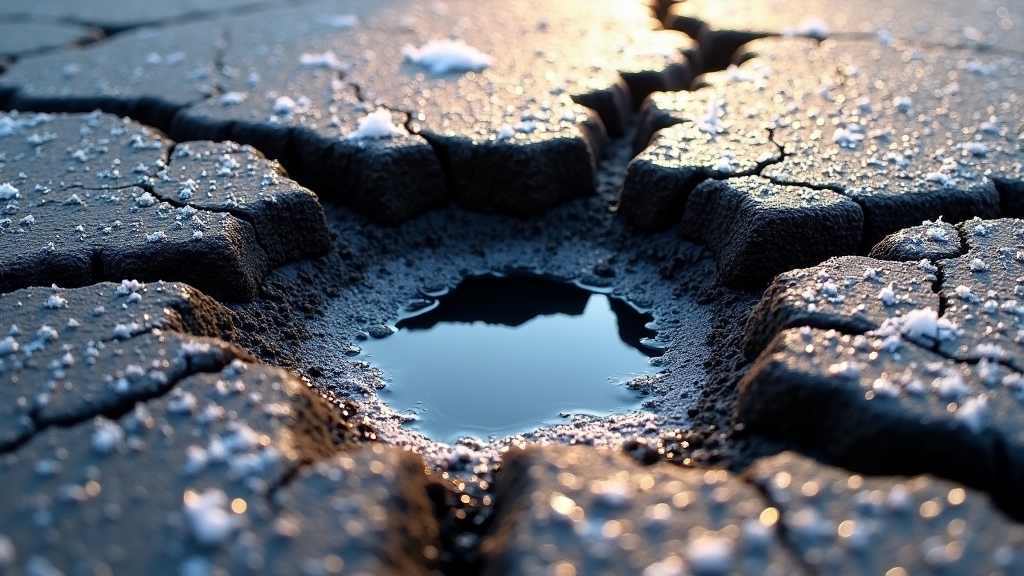
New Jersey’s average of 80-100 freeze-thaw cycles per winter season accelerates asphalt deterioration through water expansion that creates subsurface cracking and pothole formation.
Your pavement experiences its most critical damage when daytime temperatures hover around 32°F, allowing moisture to penetrate surface voids and freeze overnight.
You’ll maximize your asphalt’s lifespan by scheduling crack sealing operations in late summer or early fall—before November’s first hard freeze compromises pavement integrity.
Understanding Freeze-Thaw Damage Mechanisms
When temperatures fluctuate above and below 32°F, water trapped within asphalt’s porous structure expands by approximately 9% upon freezing, generating internal pressures exceeding 2,000 psi that fracture the binder-aggregate bond.
New Jersey experiences 30-50 freeze thaw cycles annually, accelerating pavement deterioration through progressive microcracking. Each cycle compounds structural weakness as meltwater penetrates deeper fissures, creating hydraulic pressure that propagates damage exponentially.
You’ll observe this mechanism manifesting as surface raveling, pothole formation, and edge deterioration—particularly in pavements with air void contents above 8%.
The damage mechanisms intensify when de-icing salts lower water’s freezing point, extending the critical temperature range from 28°F to 32°F.
Understanding these thermodynamic forces enables you to implement preventive maintenance strategies before irreversible structural compromise occurs, optimizing your pavement’s service life in New Jersey’s challenging climate.
Seasonal Temperature Fluctuation Effects
Throughout New Jersey’s annual temperature cycle, asphalt pavements endure thermal stress ranges exceeding 140°F—from summer surface temperatures reaching 160°F to winter lows of -5°F—causing the binder to oscillate between viscous and brittle states that compromise long-term structural integrity.
You’ll observe accelerated deterioration when temperature extremes induce differential expansion coefficients between aggregate and binder phases. Each thermal cycle propagates micro-cracks that coalesce into macro-failures, particularly at pavement edges and joints where stress concentration peaks.
New Jersey’s 80-100 annual freeze-thaw events compound seasonal wear by introducing moisture into compromised zones, creating volumetric expansion forces reaching 9% during ice formation.
You must recognize that pavements experiencing this cyclical loading demonstrate 30-40% reduced service life compared to thermally stable climates, necessitating regional mix designs with polymer-modified binders and enhanced air void specifications.
Preventative Maintenance Timing Strategies
Because New Jersey’s freeze-thaw cycles inflict maximum pavement damage during late winter and early spring changes, you must schedule preventative maintenance interventions during ideal weather windows to maximize treatment effectiveness and material performance.
You’ll achieve excellent results by implementing crack sealing between April and June when temperatures stabilize above 50°F consistently.
Sealcoating requires ambient temperatures exceeding 55°F with three consecutive rain-free days—typically mid-May through September in New Jersey’s climate zones.
Your maintenance schedules should prioritize fall inspections (September-October) to identify deterioration before winter accelerates damage progression.
Deploy preventative techniques like infrared patching during 60-75°F conditions for superior bonding.
Document your intervention timing against temperature data to refine future scheduling protocols.
Strategic timing transforms routine maintenance into lifecycle-extending investments that counteract New Jersey’s aggressive freeze-thaw degradation patterns.
Summer Heat and UV Exposure: Silent Threats to Your Asphalt
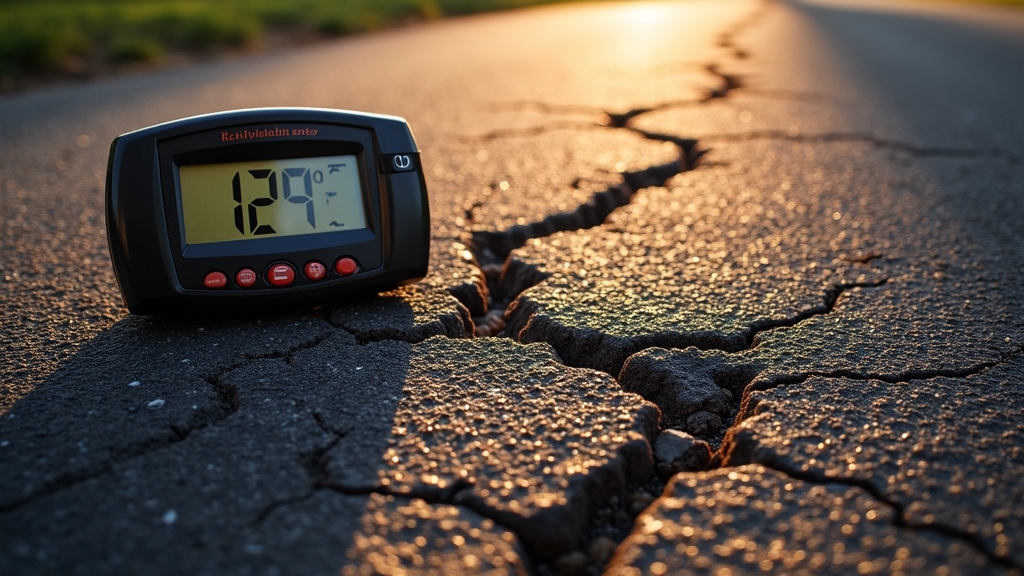
New Jersey’s summer temperatures regularly exceed 90°F, and your asphalt absorbs this intense heat while simultaneously enduring up to 12 hours of daily UV radiation during peak season.
This dual assault accelerates oxidation, causing binder volatilization that transforms flexible pavement into brittle, crack-prone surfaces within 18-24 months without protection.
UV radiation effects penetrate asphalt’s top layer, breaking down chemical bonds in the bitumen matrix.
UV radiation destroys bitumen’s molecular structure at the surface level, initiating chemical breakdown that compromises your pavement’s structural integrity from the top down.
You’ll observe this degradation as surface graying and aggregate exposure.
Heat expansion compounds the damage—your pavement expands during 95°F afternoons and contracts overnight when temperatures drop to 65°F.
These repeated thermal cycles create internal stress fractures.
Data from coastal New Jersey properties shows 40% faster deterioration rates compared to inland areas, where humidity amplifies UV damage.
Sealcoating every 2-3 years reduces oxidation by 65%, considerably extending pavement longevity.
The Role of Rainfall and Drainage in Asphalt Longevity
With New Jersey receiving an average of 47 inches of annual precipitation, water infiltration ranks as the primary accelerant of asphalt deterioration across the state. The rainfall impact manifests through subsurface erosion, where moisture penetrates micro-cracks and compromises the aggregate base.
During freeze-thaw cycles, trapped water expands by 9%, creating structural failures you’ll recognize as potholes and alligator cracking.
Effective drainage solutions directly correlate with pavement longevity. You’ll need proper slope gradients (minimum 2% cross-slope), functional catch basins, and permeable edge treatments to redirect water away from the asphalt surface.
Installing French drains along pavement perimeters prevents lateral moisture intrusion, while regular maintenance of existing drainage infrastructure guarantees ideal performance.
Properties with engineered drainage systems consistently demonstrate 40% longer asphalt lifespans compared to those with inadequate water management protocols.
Installation Quality: The Foundation of Long-Lasting Pavement
Quality installation determines whether your New Jersey asphalt pavement reaches its 20-year potential or fails within five.
You’ll need a contractor who understands that proper base preparation—including 8-12 inches of compacted aggregate and precise grading for our state’s 45-inch annual rainfall—isn’t optional.
The difference between adequate and exceptional installation quality directly translates to thousands of dollars in premature repair costs or long-term performance.
Proper Base Preparation Methods
Before any asphalt is laid, the base layer determines whether your pavement will last 15 years or fail within 5. New Jersey’s freeze-thaw cycles demand engineered solutions, not shortcuts.
Your base preparation requires:
- Subgrade compaction to 95% Modified Proctor density – preventing differential settlement that creates low spots where water accumulates
- 6-8 inches of processed aggregate base (CR-6 or equivalent) – providing structural support and drainage capacity
- Proper slope grading at 2% minimum – ensuring water moves away from pavement edges
- Vibratory roller compaction in 4-inch lifts – eliminating air voids that compromise load distribution
Material selection choices matter considerably. Crushed angular stone interlock better than rounded aggregate.
Base compacting techniques using multi-pass methodologies with moisture-controlled material achieve peak density. These specifications aren’t suggestions—they’re requirements for withstanding New Jersey’s challenging climate conditions.
Skilled Contractor Selection Matters
Three critical decisions separate a 20-year asphalt installation from one requiring repairs within 36 months—and your contractor choice determines all of them.
Contractor expertise manifests in three measurable competencies: proper aggregate gradation selection for New Jersey’s freeze-thaw cycles, precise temperature management during laydown (maintaining 280-300°F at the screed), and appropriate compaction sequencing achieving 92-96% density.
You’ll verify this expertise through documented certifications from the National Asphalt Pavement Association and references from projects exceeding five years without structural failure.
Project timelines reveal contractor capability—rushed installations skip essential curing periods between lifts. Demand contractors who schedule work around New Jersey’s ambient temperature requirements (minimum 50°F for 24 hours post-installation) and moisture forecasts.
These technical specifications aren’t negotiable; they’re prerequisites for longevity.
Essential Maintenance Practices to Extend Asphalt Life
Regular maintenance directly impacts whether your asphalt pavement reaches its expected 20-25 year lifespan in New Jersey or fails prematurely within 10-12 years.
Implement these essential practices:
- Sealcoating every 2-3 years: Apply coal tar or asphalt-based sealants to protect against UV oxidation, moisture penetration, and freeze-thaw damage characteristic of New Jersey’s climate.
- Crack filling within 30 days: Address cracks exceeding 1/4-inch width using hot rubberized or cold-pour crack filler before water infiltration compromises the base.
- Asphalt rejuvenation techniques: Apply bio-based or petroleum-based rejuvenators to restore maltenes lost through oxidation, extending pavement flexibility by 5-8 years.
- Surface repair options: Execute infrared patching for localized failures or mill-and-overlay procedures for extensive deterioration before structural damage occurs.
These data-driven interventions considerably reduce long-term rehabilitation costs while maximizing pavement performance.
Sealcoating Schedules for New Jersey Weather Conditions
New Jersey’s freeze-thaw cycles and temperature fluctuations require you to apply sealcoating every 2-3 years for residential driveways and 1-2 years for high-traffic commercial surfaces.
You’ll achieve the best results by scheduling applications between May and September when temperatures consistently remain above 50°F and humidity levels stay below 90%.
Your timing must account for New Jersey’s annual precipitation patterns, allowing at least 24-48 hours of dry conditions before and after application to guarantee proper curing and adhesion.
Optimal Sealcoating Frequency Timeline
Because New Jersey’s freeze-thaw cycles accelerate asphalt oxidation and surface degradation, property owners must implement a strategic sealcoating schedule that accounts for the state’s 80-120 freeze-thaw events per winter season.
You’ll maximize sealcoating benefits by adhering to this evidence-based timeline:
- Initial application: Apply 6-12 months post-installation when volatiles have adequately evaporated
- Subsequent treatments: Reapply every 2-3 years for residential drives; 18-24 months for commercial surfaces experiencing heavy traffic loads
- Optimal timing: Schedule applications between May-September when ambient temperatures exceed 50°F and humidity remains below 50%
- Climate adjustment: Properties in northern counties require more frequent intervals due to elevated freeze-thaw frequency
This regimen mitigates UV degradation, prevents moisture infiltration, and extends pavement serviceability by 300%.
Monitor surface conditions annually to adjust frequency based on traffic patterns and weathering indicators.
Seasonal Application Best Practices
Strategic timing of sealcoating applications in New Jersey directly correlates with surface adhesion rates, curing efficacy, and long-term performance metrics.
You’ll achieve superior results when ambient temperatures maintain 50-85°F with minimum pavement temperatures of 50°F for at least 24 hours post-application. Temperature monitoring isn’t optional—it’s essential for preventing premature degradation.
Late spring through early fall (May-September) provides New Jersey’s ideal application window, though you must account for humidity levels below 90% and zero precipitation forecasts for 48 hours.
Schedule seasonal repairs before sealcoating to maximize adhesion. Avoid applications when overnight temperatures drop below 50°F, as incomplete curing compromises the sealant’s protective properties.
Mid-summer applications demand careful moisture management, while September often presents New Jersey’s most consistent conditions for professional-grade installations.
Traffic Patterns and Load Bearing Considerations
Traffic volume and vehicle classification directly determine how quickly asphalt pavements deteriorate across New Jersey’s diverse roadway network. Your pavement’s structural integrity depends on proper load distribution calculations during design phases, accounting for anticipated axle weights and repetitive loading cycles.
New Jersey’s pavement engineers must consider:
Proper pavement design requires engineers to account for traffic loading patterns, vehicle classifications, and concentrated stress factors unique to each roadway segment.
- ESAL calculations – Equivalent Single Axle Loads quantify cumulative damage from mixed traffic streams
- Truck percentages – Routes exceeding 15% heavy commercial vehicles require enhanced base courses
- Channelization effects – Concentrated wheel paths accelerate rutting in outer lanes and turning movements
- Peak hour stress – High traffic volume during commuter periods compounds temperature-related pavement fatigue
You’ll maximize service life by matching pavement thickness to actual loading conditions rather than applying generic specifications across all applications.
Warning Signs Your Asphalt Needs Repair or Replacement
How can property owners identify the critical threshold between routine maintenance and complete pavement reconstruction? You’ll need to assess specific distress indicators that signal structural compromise versus superficial degradation.
Alligator cracking patterns—interconnected fissures resembling reptilian scales—indicate base failure requiring reconstruction. Linear cracks under 3/8″ width typically respond to crack sealing. Surface discoloration from oxidation presents as gray weathering but doesn’t necessitate replacement unless accompanied by raveling (aggregate separation).
Monitor depressions exceeding 1″ depth, which trap water and accelerate deterioration through freeze-thaw cycling. Edge deterioration beyond 12″ from pavement boundaries suggests inadequate drainage or base support.
New Jersey’s coastal regions experience accelerated salt-induced degradation, while northern zones show faster thermal cracking progression.
Document distress progression quarterly to establish replacement timing based on deterioration velocity rather than arbitrary timelines.
Cost-Benefit Analysis: Repair vs. Full Replacement Decisions
When your asphalt shows significant distress, you’re facing expenditure decisions that’ll impact your property’s operational budget for years.
New Jersey’s freeze-thaw cycles demand quantitative analysis of repair costs versus replacement benefits.
Consider these financial thresholds:
- Repair viability: Surface treatments cost $1-3/sq ft when distress affects <30% of pavement area
- Replacement triggers: Full reconstruction ($8-12/sq ft) becomes economically justified when structural failure exceeds 40% coverage
- Life-cycle calculations: Repairs extending lifespan 3-5 years versus replacement delivering 20-25 years of service
- Hidden costs: Frequent patching generates 2-3x labor expenses compared to single replacement projects
Calculate your cost-per-year-of-service metric.
When repairs exceed 50% of replacement costs while delivering less than 25% of new pavement longevity, replacement becomes fiscally prudent for New Jersey properties.
Frequently Asked Questions
What Permits Are Required for Asphalt Installation in New Jersey?
You’ll need local building permits for asphalt installation in New Jersey, with specific permit requirements varying by municipality. Commercial projects typically require site plan approval, while residential driveways often need zoning permits and stormwater management compliance documentation from your town’s building department.
How Does Asphalt Compare to Concrete for New Jersey Driveways?
You’ll find asphalt benefits include lower installation costs ($3-5/sq ft) and faster curing, while concrete durability extends 30-40 years versus asphalt’s 20-25 years in New Jersey’s freeze-thaw cycles, though it costs $6-10/sq ft.
Can I Install Asphalt Myself or Must I Hire Professionals?
You’ll need professionals for asphalt installation. DIY vs. professionals isn’t debatable here—proper grading, compaction equipment, and hot-mix application require specialized machinery and expertise. New Jersey’s freeze-thaw cycles demand professional-grade installation to guarantee longevity and performance.
What Is the Best Time of Year to Pave Asphalt in New Jersey?
You’ll achieve ideal results paving between late spring and early fall when New Jersey’s seasonal weather provides consistent 50°F+ temperatures. These conditions enable proper paving techniques, ensuring adequate compaction and curing before winter’s freeze-thaw cycles compromise your pavement’s structural integrity.
How Long Must New Asphalt Cure Before Driving on It?
You’ll need to wait 24-48 hours before driving on new asphalt in New Jersey’s climate. Proper asphalt curing requires avoiding heavy loads for 5-7 days to guarantee ideal driveway maintenance and longevity of your pavement installation.
Conclusion
In New Jersey’s demanding climate, proper installation and consistent maintenance make the difference between an asphalt pavement that lasts 15–20 years and one that fails in half the time. With up to 100 freeze-thaw cycles per year, heavy rainfall, and coastal salt exposure, your driveway endures conditions that require proactive care. Sealcoating every 2–3 years, timely crack sealing, and effective drainage management are essential to preserving your investment and preventing costly structural damage.
Whether you’re maintaining an existing surface or planning a full asphalt driveway installation, partnering with experienced professionals ensures long-term performance. The team at Paterson Asphalt Paving understands the region’s unique climate challenges and applies precision engineering to every project—from asphalt resurfacing to sealcoating and commercial paving.
Serving homeowners and businesses throughout Paterson, NJ, we specialize in building pavements engineered to withstand the state’s extreme temperature swings and precipitation levels.
Ready to protect your investment?Get your free estimate today or call (862) 292-2384 to consult with our asphalt experts.
Trust Paterson Asphalt Paving—New Jersey’s local leader in durable, weather-resistant asphalt solutions—to help you extend your pavement’s lifespan for decades to come.