
Asphalt consists of 90-95% mineral aggregates—crushed stone, sand, and gravel—bound by 5-10% bitumen, a viscoelastic hydrocarbon derived from petroleum refining. The bitumen contains four molecular fractions (saturates, aromatics, resins, and asphaltenes) that determine viscosity, adhesion, and aging resistance. Aggregates provide structural integrity through mechanical interlock, while bitumen penetrates pores and forms physicochemical bonds with stone surfaces. You’ll find that precise aggregate-to-binder ratios, typically 93-97% stone to 3-7% binder, along with climate-specific modifications, create pavement engineered for your region’s temperature extremes and traffic loads.
Key Takeaways
- Asphalt pavement comprises 90-95% mineral aggregates like crushed stone and sand, with 5-10% bituminous binder holding them together.
- Bitumen, a viscoelastic hydrocarbon from petroleum refining, binds aggregates and consists of four fractions: saturates, aromatics, resins, and asphaltenes.
- Aggregates provide structural stability and load distribution, with angularity enhancing mechanical interlock to resist rutting under traffic loads.
- Bitumen adheres through mechanical interlocking in pores, physicochemical van der Waals forces, and chemical reactions with calcium-rich aggregates.
- Optimal asphalt mixtures maintain 3-5% air voids and precise aggregate-to-binder ratios, typically 93-97% aggregates to 3-7% binder by weight.
The Two Essential Components: Aggregates and Bitumen
At its core, asphalt pavement consists of two primary constituents that work in tandem to create a durable road surface: mineral aggregates and bituminous binder.
You’ll find that aggregates comprise 90-95% of the mix by weight, providing structural stability and load distribution. Various aggregate types—including crushed stone, sand, and gravel—are selected based on gradation requirements and performance specifications.
The remaining 5-10% consists of bitumen, a viscoelastic hydrocarbon that serves as the binding agent. Critical bitumen properties such as viscosity, penetration grade, and softening point determine how effectively it’ll coat aggregates and resist deformation under traffic loads.
Understanding these components’ interaction enables you to engineer pavements that withstand environmental stresses while maintaining structural integrity.
Where Bitumen Comes From: Petroleum Refining and Natural Deposits
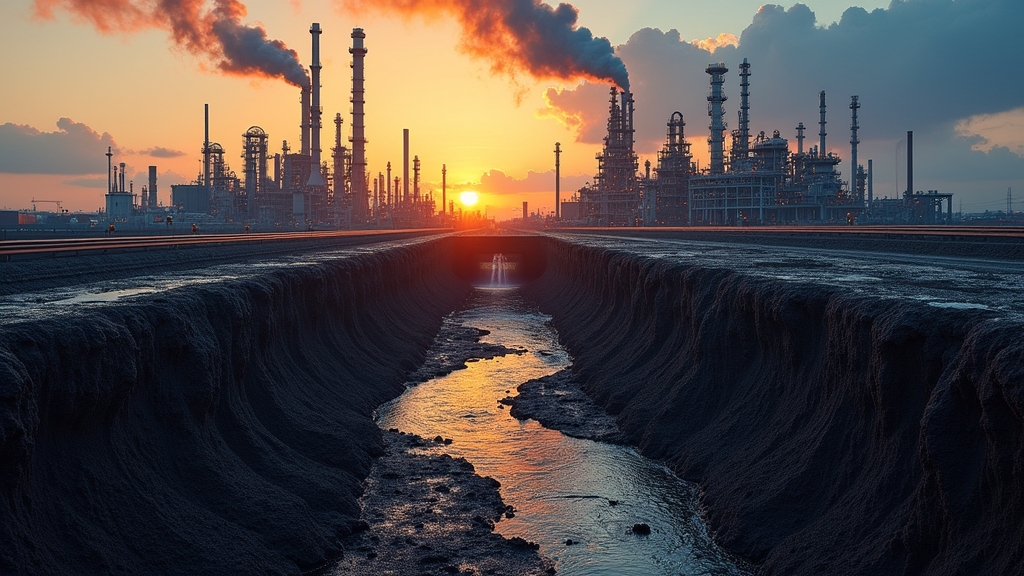
Two distinct sources supply the bitumen required for asphalt production: petroleum refining operations and naturally occurring deposits.
You’ll find that petroleum sources dominate modern bitumen extraction, where crude oil undergoes fractional distillation. The heaviest residual fraction—remaining after lighter hydrocarbons like gasoline and diesel are separated—becomes the bitumen you use in paving operations. This vacuum distillation process yields consistent, specification-grade material with predictable performance characteristics.
Natural deposits, though less common commercially, still contribute to global supply. These geological formations occur where ancient petroleum deposits have migrated near the surface, losing volatile compounds through natural weathering.
Natural bitumen deposits form when ancient petroleum migrates to the surface, weathering away volatile compounds over geological time.
You’ll encounter such deposits in Venezuela’s Orinoco Belt and Canada’s Athabasca oil sands. However, processing natural bitumen requires additional refining steps to achieve the rheological properties your paving specifications demand, making petroleum refinery sources more economically viable.
Aggregate Selection: Why Size, Shape, and Stone Type Matter
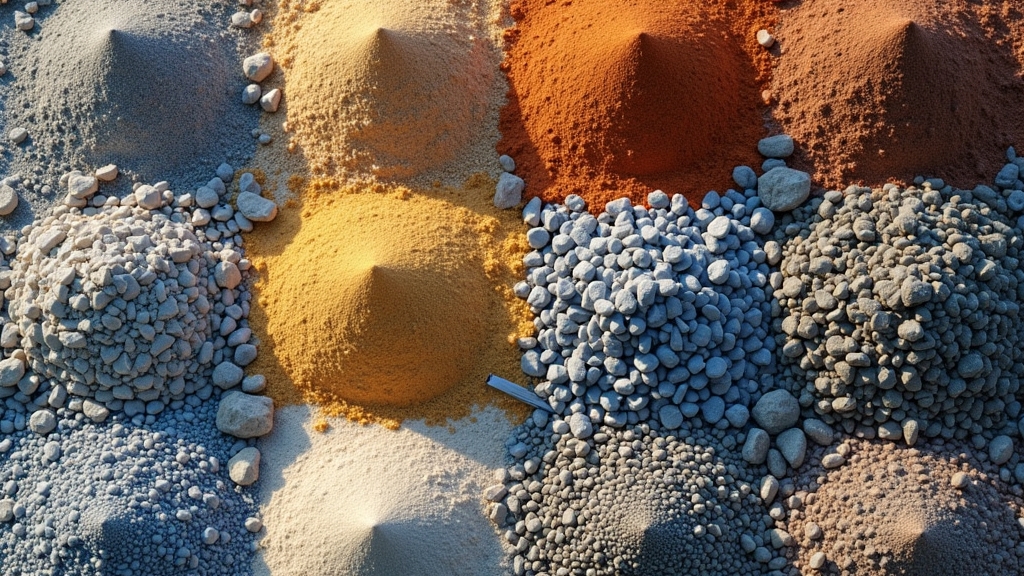
When you select aggregates for asphalt mix design, you’re controlling three interrelated properties that directly affect pavement performance: gradation (the distribution of particle sizes from dust to coarse stone), angularity (the number of fractured faces on each particle), and roundness (how weathered or processed the stones are).
Gradation determines how tightly particles pack together and influences workability during placement, while angularity creates mechanical interlock that resists rutting under traffic loads.
Rounded stones from natural deposits compact more easily but provide less shear resistance than crushed angular aggregates with multiple fractured faces.
Gradation and Particle Distribution
Since aggregate comprises 90-95% of asphalt mixture by weight, its gradation—the distribution of particle sizes within the blend—fundamentally determines pavement performance characteristics.
You’ll conduct gradation analysis through sieve testing, where samples pass through progressively finer meshes to establish particle size distribution curves.
Dense-graded mixes utilize continuous gradation from coarse to fine particles, maximizing density and stability.
Gap-graded designs intentionally omit intermediate sizes, creating void structures for specific drainage applications.
Open-graded friction courses employ mostly single-size aggregates, generating interconnected air voids exceeding 15%.
Your gradation selection directly impacts workability, density achievement, permeability, rutting resistance, and fatigue life.
You’ll reference specifications like Superpave or Marshall criteria, which define acceptable gradation bands ensuring ideal particle interlock while maintaining adequate binder content for durability.
Angularity Versus Rounded Stones
Particle shape exerts profound influence on asphalt mixture performance, with angular aggregates delivering superior mechanical interlock compared to rounded alternatives.
You’ll find angularity advantages in high-stress applications where resistance to rutting and deformation proves critical. Crushed stone’s fractured faces create mechanical keys that resist displacement under traffic loads, enhancing shear strength and stability.
Conversely, rounded stone characteristics—smooth surfaces and spherical geometry—reduce void space and improve workability during placement. However, you’ll sacrifice load-bearing capacity as these particles roll past each other under stress.
Specification writers typically mandate minimum angularity percentages for surface courses, often requiring two or more fractured faces. Natural gravel deposits may require crushing to meet these standards, while quarried materials inherently provide the sharp edges essential for structural integrity.
The Chemistry of Asphalt Binders and Adhesion
Understanding asphalt binder chemistry requires you to examine bitumen’s complex molecular structure, which consists of four primary fractions: saturates, aromatics, resins, and asphaltenes (SARA).
These molecular components directly influence how the binder adheres to aggregate surfaces through mechanical interlocking, chemical bonding, and thermodynamic interactions.
You’ll find that the ratio and arrangement of these fractions determine both the binder’s rheological properties and its adhesive performance under various environmental conditions.
Molecular Structure of Bitumen
Bitumen’s molecular architecture comprises four primary fractions—saturates, aromatics, resins, and asphaltenes (collectively termed SARA fractions)—each contributing distinct rheological properties to the binder.
Saturates provide fluidity through their aliphatic chains, while aromatics function as the primary solvent medium. Resins act as peptizing agents, stabilizing asphaltene particles in colloidal suspension. Asphaltenes—the heaviest, most polar components—form micelle-like structures that determine viscosity and temperature susceptibility.
You’ll find that the molecular properties of these fractions directly influence performance characteristics. The chemical composition’s balance affects elasticity, adhesion, and aging resistance.
Higher asphaltene content yields stiffer binders suitable for high-temperature environments, whereas aromatic-rich compositions enhance low-temperature flexibility. Understanding this molecular framework enables you to predict binder behavior under varying thermal and loading conditions.
Adhesive Bonding Mechanisms
The molecular fractions within bitumen create interfacial bonds with aggregate surfaces through three primary mechanisms: mechanical interlocking, physicochemical adsorption, and chemical reaction.
You’ll observe mechanical interlocking when bitumen penetrates the aggregate’s microscopic pores and surface irregularities, forming physical anchors upon cooling.
Physicochemical adsorption occurs through van der Waals forces and dipole interactions between polar bitumen components—particularly asphaltenes and resins—and the aggregate’s mineral surface.
Chemical bonding develops when carboxylic acids within bitumen react with calcium-rich aggregates, creating stable covalent bonds.
These adhesive properties determine pavement performance under moisture exposure and traffic loading. Understanding how bonding agents enhance these mechanisms allows you to optimize mix designs.
The asphaltene-to-maltene ratio critically influences bond strength, with higher asphaltene content typically improving adhesion but reducing workability.
Mix Design Ratios: Balancing Durability and Performance
When designing asphalt mixtures, engineers must establish precise aggregate-to-binder ratios that directly influence pavement longevity and structural integrity. Typical hot mix asphalt contains 93-97% aggregates by weight, with binder comprising the remaining 3-7%.
These mix ratios demand rigorous performance enhancement through volumetric analysis and Marshall stability testing.
Optimal asphalt performance requires meticulous volumetric analysis and Marshall stability protocols to validate structural specifications and ensure long-term pavement durability.
Critical parameters you’ll evaluate include:
- Voids in Mineral Aggregate (VMA): Determines space available for asphalt binder, typically ranging from 13-16% depending on nominal maximum aggregate size.
- Air Void Content: Ideal range of 3-5% prevents rutting while maintaining permeability resistance.
- Voids Filled with Asphalt (VFA): Generally specified between 65-75% to guarantee adequate film thickness without flushing.
You’ll adjust gradation curves, binder content, and compaction efforts to achieve target densities that maximize load distribution while resisting moisture infiltration and thermal stress.
How Temperature and Climate Influence Asphalt Composition
Temperature extremes dictate fundamental modifications to asphalt binder selection and aggregate composition strategies.
You’ll engineer warm-climate mixtures using polymer-modified binders with higher performance grades (PG 76-22 or PG 82-22) to resist rutting and thermal deformation during peak heat exposure.
Cold-climate formulations require softer binders (PG 58-34 or PG 52-40) that maintain flexibility, preventing thermal cracking at subzero temperatures.
Climate variations demand precise adjustments to asphalt cement content and air void percentages.
You’ll increase binder film thickness in freeze-thaw environments while reducing it in high-temperature regions to minimize bleeding.
Temperature effects on aggregate thermal expansion coefficients influence your selection of crustal materials—limestone demonstrates superior performance in northern climates, while granite aggregates withstand southern heat loads more effectively through reduced thermal susceptibility and enhanced load distribution characteristics.
Frequently Asked Questions
How Long Does Asphalt Take to Fully Cure After Installation?
You’ll observe asphalt’s complete curing process requires 6-12 months post-installation, though surface trafficking’s permissible within 24-48 hours. Installation timing greatly impacts cure rates—ambient temperature, mix design, and pavement thickness directly influence molecular bonding completion and aggregate interlock stabilization.
Can Recycled Asphalt Be as Durable as New Asphalt?
Yes, you’ll achieve equivalent asphalt performance when recycled materials undergo proper milling, screening, and rejuvenation processes. Modern additives restore aged binder properties, ensuring structural integrity matches virgin mixtures when you maintain correct gradation and compaction standards.
Why Is Asphalt Black Instead of Another Color?
Asphalt’s black color results from bitumen’s complex hydrocarbon structure, which absorbs most visible wavelengths, affecting your color perception. This dark pigmentation enhances thermal properties by maximizing solar radiation absorption, improving workability during placement and accelerating curing processes.
How Much Does Asphalt Cost per Square Foot to Install?
You’ll typically pay $3-$7 per square foot for asphalt installation, though asphalt pricing varies considerably. Installation factors including subgrade preparation, thickness specifications, project scale, site accessibility, and regional aggregate costs directly impact your final per-square-foot expenditure.
What Is the Difference Between Asphalt and Concrete Pavement?
You’ll find asphalt properties include petroleum-based binder with aggregate, offering flexibility and faster curing. Concrete composition uses portland cement binder with aggregate, creating rigid pavements. Asphalt’s viscoelastic nature contrasts concrete’s hydraulic setting mechanism, affecting performance characteristics.
Conclusion
Ultimately, asphalt’s exceptional performance stems from its precise balance of materials and engineering principles. A mix containing approximately 95% aggregates and 5% bituminous binder—optimized for viscosity, temperature, and regional climate—determines how well your pavement will resist rutting, cracking, and fatigue over time. The aggregate gradation governs density and load-bearing capacity, while binder composition dictates flexibility and adhesion. When designed and installed correctly, this synergy produces a surface that can deliver decades of dependable service life under the harshest environmental and traffic conditions.
However, the science behind asphalt is only as strong as the professionals applying it. That’s why property owners across Paterson, NJ trust Paterson Asphalt Paving for precision-engineered pavement solutions. Our experienced team uses industry-best materials and proven installation techniques to ensure your driveway, parking lot, or commercial surface performs flawlessly for years to come.
Whether you need asphalt driveway paving, asphalt resurfacing, or sealcoating to protect your existing surface, our experts deliver long-term value and durability.
Ready to build with confidence?Request your free estimate today or call (862) 292-2384 to speak directly with our paving specialists.
Trust Paterson Asphalt Paving—where science meets craftsmanship—to help you create a surface that lasts for decades.